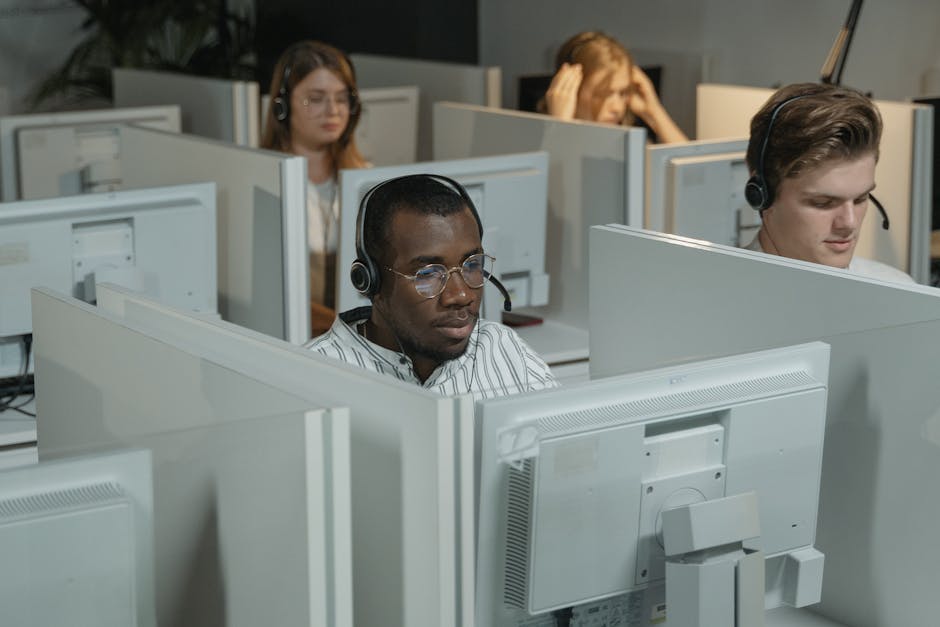
I spent four years watching call center agents get played by scammers. Back then, it was mostly social engineering—scripts about "suspicious activity" and "urgency." Today, the threat actor doesn't need a charismatic crook on the other end of the line; they need a GPU, a subscription to a cloning service, and thirty seconds of an executive’s voice from a LinkedIn post.
According to McKinsey 2024, over 40% of organizations encountered at least one AI-generated audio attack or scam in the past year. That is not a trend; that is a tax on doing business. But as we move from basic vishing to sophisticated deepfakes, the security industry is flooding the market with "detectors." Before you deploy a shiny new tool, stop and ask the most important question: Where does the audio go?
Recorded Audio vs. Live Streaming: The Technical Divide
When you hear a vendor promise "Deepfake Detection," you need to ask them if they are looking at recorded audio or live streaming. They are not the same thing. They aren't even playing the same sport.
The "Recorded Audio" Sandbox
Analyzing recorded audio is the easy mode of the deepfake era. If you have an MP3 or WAV file, you have the luxury of time. You can run spectral analysis, check for phase artifacts, look for inconsistent breathing patterns, and run the file through multiple passes of a neural network. You aren't constrained by latency. You can pull the audio apart, reassemble it, and look for the seams.
The "Live Streaming" Nightmare
Live streaming is where security teams go to die. When a fraudster is spoofing a CEO on a Zoom call or a customer service rep, you have milliseconds to make a decision. If your tool adds 500ms of latency, the conversation becomes unworkable. Furthermore, live audio is subject to jitter, packet loss, and codec compression. That "pristine" deepfake you tested in the lab looks nothing like the garbled, compressed, noisy stream coming through a consumer-grade laptop microphone. If your detector doesn't account for network degradation, it’s useless.
Tool Comparison: Where Do We Stand?
The market is saturated with buzzwords. Let’s strip that away and look at the actual architecture of detection. I’ve categorized these based on how they interact with your data—and remember, if the vendor says "just trust the AI," walk away.
Tool Category Data Handling ("Where does it go?") Latency Primary Use Case API-Based (Cloud) Sent to vendor servers High (Network overhead) Forensic audits of recorded files Browser Extension Local client-side analysis Low (Mostly) Consumer protection, web meetings On-Device/Edge Local processing (Privacy focused) Very Low High-security endpoint protection On-Prem Forensic Internal servers Medium Enterprise-wide bulk analysisThe "Accuracy" Myth and Why You Shouldn't Believe It
I hate it when vendors hit me with "99.9% accuracy." That number is a fabrication. It’s almost always based on a clean, high-fidelity test set that has no relation to the real world. In my time in fraud ops, I learned that "accuracy" is a function of the environment, not just the model.
If a vendor claims high accuracy, ask them for the Conditions of Failure. Did they test against Opus-compressed audio? Did they test against background noise from a subway station? Did they test against a "low-quality" deepfake versus a "high-quality" one? If the answer is "we tested against our own internal dataset," they have given you zero actionable data.
Always assume the adversary is testing against the same detectors you are using. If they can pipe their deepfake through a filter that mimics common audio compression artifacts, they can blind your model. That is why I maintain a checklist for "bad audio" edge cases.
My "Bad Audio" Edge Case Checklist
Before I sign off on any detection tooling for my current fintech team, I put the tool through this gauntlet. If it fails these, it doesn't get deployed:
- The Compression Test: Feed the audio through a low-bitrate VoIP stream (G.711 or similar). Does the detector hallucinate or fail to classify? The Background Noise Test: Layer in HVAC hum, distant chatter, or keyboard clicking. Deepfakes often struggle to sync the "noise floor" correctly—but detectors often struggle to ignore it. The Cross-Talk Test: Can the tool distinguish the target voice from the interviewer in a real-time conversation? The "Where Does the Audio Go" Privacy Audit: If the tool is cloud-based, does the vendor store the audio? Are they using my traffic to retrain their models? (Hint: If they are, that’s a massive PII/GDPR liability.)
Real-Time vs. Batch: The Strategic Divide
You need to choose your weapon based on the threat model. Are you trying to stop an active transfer of funds (Live/Real-Time), or are you trying to build a corpus of evidence against a recurring threat (Batch)?
When to use Batch Analysis
Batch analysis is for forensic platforms. Use these when you have time to let the machine churn. These tools allow for deep packet inspection of the audio waveform. In a fintech environment, I use these to analyze recordings of customer interactions after the fact to identify patterns of attempted account takeover. It’s less about stopping the crime in the moment and more about identifying the "fingerprint" of the bot farm that’s targeting us.
When to use Real-Time
Real-time detection is the "holy grail," but it’s still immature. If you deploy a real-time solution, do not rely on it as a kill-switch. Treat it as a "confidence score" that triggers a manual review or a step-up authentication challenge. If the detector says, "I am 80% sure this is a deepfake," do not hang up on the customer. Trigger a multi-factor authentication (MFA) push to their device instead. Never trust a single AI signal as a source of truth.

Final Thoughts: Don't Trust the AI, Trust the Process
We are currently in a game of cat-and-mouse. The detectors are always three months behind the generators. If you are waiting for a "perfect" piece of software to solve your deepfake problem, you are going to lose money. Security is not a product; it is a workflow.
Build your resilience around these pillars:
Verification over Detection: Never rely on audio alone. If an executive calls you, have an out-of-band verification process (e.g., Slack, encrypted messaging, or a pre-agreed code word). Contextual Skepticism: Fraudsters love urgency. If the voice on the other end is screaming about a "time-sensitive wire transfer," the stress is designed to bypass your logical brain. That stress is your first signal of a deepfake, long before any software alerts you. Continuous Monitoring: Audit your audio-based processes. Are you still using phone-based authentication for high-value transactions? If so, why? Move to FIDO-based hardware keys or biometrics that are not based on audio synthesis.Technology is a force multiplier, not a magic real time deepfake detection wand. Ask the hard questions, test the tools in the worst conditions possible, and for heaven's sake, if a vendor tells you their tool is "unbeatable," find a different vendor. In this industry, the only people claiming perfection are the ones who haven't been breached yet.